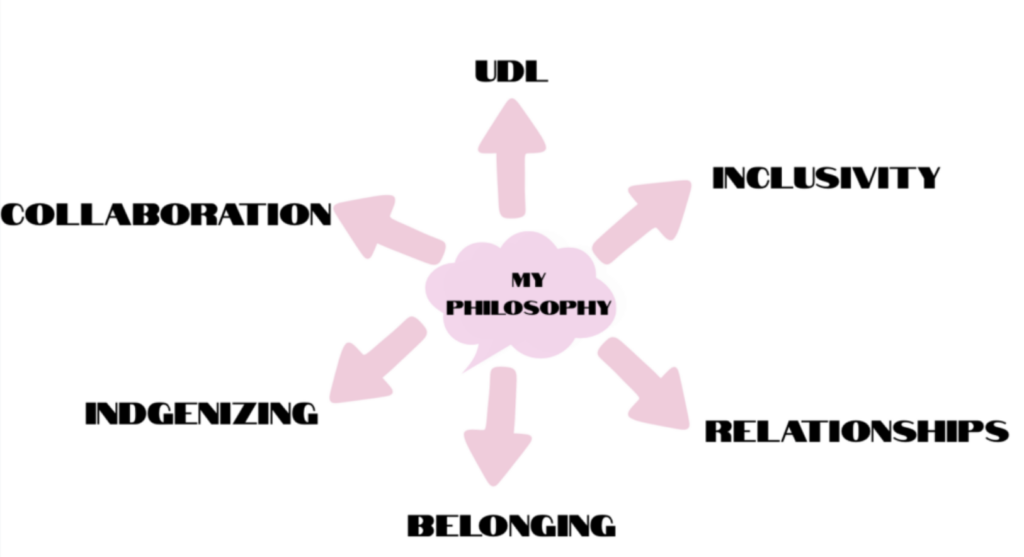
My Teaching Philosophy:
Inclusivity: Creating an inclusive and safe space is important in my teaching philosophy. I know what it’s like to not feel included so I always want my classroom to be a safe and inclusive space for all of my students. When students feel included they’re more likely to put themselves out there, ask questions, and fully engage in their learning. I also think the classroom environment itself plays a large role in whether students feel included or not. Having something as simple as artwork or posters on the walls can send a message about who is included, without having to say anything.
Belonging: I recognize both privilege and struggle in my own background. Being white and cisgender meant that I never had to question whether my identity would be accepted in school, and that gave me an advantage compared to some of my other classmates. That being said, growing up poor meant that I knew what it felt like to have fewer opportunities and resources to help me succeed. These experiences shaped my belief that every student deserves equal and equitable access to learning opportunities. I know that my privilege can cause blind spots, so I need to be mindful not to assume all students feel included. I also worry that in trying so hard to be inclusive to certain groups of students, I may accidentally overlook others.
Relationships: I want my students to feel safe, respected, and supported so they can actually focus on their learning. I like to build relationships with my students so I can help them succeed in every aspect of their lives. I also believe it’s important to meet students where they’re at because every student has different strengths, challenges, and experiences.
Indigenizing: I want to find a way to include indigenous voices in my classroom as much as possible. I want to try and bring in more Indigenous voices as guest speakers and incorporate that into my math lessons. I also want to find more ways to incorporate Indigenous ways of learning into more sections of Math, because sometimes it’s not so easy to make those connections.
Collaboration: Students are encouraged to collaborate with their classmates and learn new things from each other, which supports their learning and also their social development. For in-class activities, I like to encourage group work and collaboration.
UDL: I like to use different UDL strategies so that all students have the chance to succeed. As a math teacher, I like to give quizzes at the end of each unit to assess the students’ learning. To make this more inclusive, I let students correct their errors for partial marks. This gives them the chance to learn from their mistakes and build a deeper understanding, rather than just seeing what went wrong and moving on. For in-class activities, I always give problems of varying difficulty to follow a low-floor, high-ceiling approach. I also offer more challenging problems for students who want to push themselves further, and may include bonus questions on quizzes for extra marks, and to challenge students who are ready for more difficult problems.